Introduction
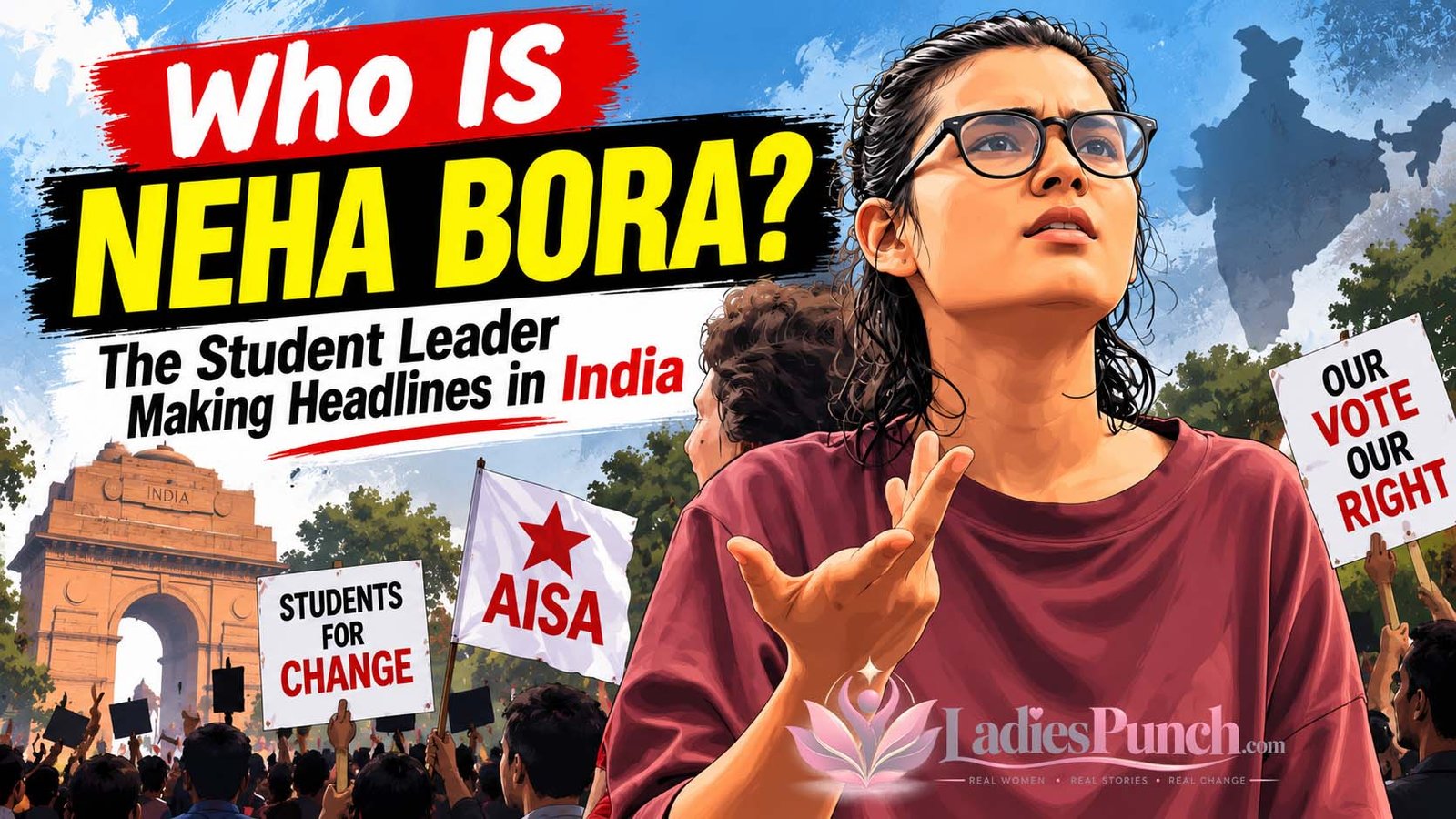
Neha Bora, the national president of the All India Students’ Association (AISA), has become a prominent figure in India’s recent student-led protest movement. Their speeches and participation in demonstrations in New Delhi have brought renewed attention to student activism, electoral accountability and the role of young people in public life.
A report published by The Independent on 12 October 2026 examined Bora’s journey from university theatre to political activism and their growing public profile during demonstrations in the Indian capital.
Bora’s story offers a closer look at how education, cultural experiences and student movements can influence a person’s decision to engage with social and political issues.
Who Is Neha Bora?
Neha Bora is a 29-year-old doctoral student at Jawaharlal Nehru University (JNU) in New Delhi and the national president of AISA, a left-wing student organisation.
Bora has participated in campaigns concerning education, unemployment, examination irregularities and the treatment of demonstrators by police. Their speeches, delivered in Hindi and English, connect student concerns with wider questions about constitutional rights, inequality and government accountability.
According to The Independent, Bora did not initially plan to become a political activist. Their involvement developed through university experiences, theatre and student-led protests.
Their growing visibility during recent demonstrations has made them one of the student activists attracting national media attention.
Early Life and Education
Bora grew up in Uttarakhand, a Himalayan state in northern India. Their family moved frequently during childhood because their father served in the Indian Army.
They later studied at Delhi University before beginning doctoral studies at JNU’s School of Arts and Aesthetics.
Their academic journey and involvement in university life form an important part of their background. Universities can provide spaces where students encounter different perspectives, discuss public issues and organise around shared concerns.
For Bora, these experiences became part of a wider journey towards student activism.
How Theatre Influenced Their Activism
An interesting aspect of Bora’s background is their involvement in theatre as an undergraduate student.
In an interview with Reuters cited by The Independent, Bora explained how acting helped them understand people whose experiences and perspectives differed from their own.
Theatre involves stepping into another person’s circumstances and attempting to understand their point of view. This experience can encourage empathy, observation and communication—skills that can also be useful in public speaking and community engagement.
Bora has since become known for speeches that combine direct language with references to students’ concerns and constitutional rights.
Their theatre experience provides one perspective on how cultural activities can influence the way people communicate and participate in public life.
From Student Protests to a Wider Public Role
Bora’s political involvement developed during a period of significant student demonstrations in India.
The protests against the Citizenship Amendment Act in 2019 and 2020 were an important turning point in their account of becoming politically active. Critics argued that the legislation discriminated against Muslims, while the Indian government defended the law.
Bora has also participated in campaigns concerning alleged examination-paper leaks and unemployment.
In July 2026, they attracted wider attention during demonstrations over alleged examination irregularities. Activists called for accountability and demanded the education minister’s resignation.
These demands were part of the protesters’ campaign; they should not be interpreted as proof that every allegation had been independently established.
Bora’s speeches and public appearances subsequently circulated online, contributing to their growing recognition beyond university campuses.
What Happened During the October 2026 Delhi Protests?
In October 2026, Bora became a prominent participant in demonstrations demanding the resignation of Chief Election Commissioner Gyanesh Kumar.
The protests involved AISA, the youth-led Cockroach Janta Party (CJP) and other activists. They centred on allegations concerning changes to electoral rolls under India’s Special Intensive Revision (SIR) process.
Protesters argued that the handling of voter records raised concerns about electoral accountability and the potential exclusion of eligible voters. They demanded greater scrutiny of the process and the election chief’s resignation.
On 10 October, demonstrators were unable to reach Jantar Mantar, Delhi’s designated protest site, after police blocked access. According to The Independent, Bora urged supporters to regroup at Dilli Haat instead.
Police detained Bora and other activists during the demonstrations. Even while in detention, Bora called for the protest movement to continue. They were released later that Saturday.
The incident drew further attention to the demonstrations and the dispute over electoral-roll revisions.
Understanding the Voter-List Controversy
The electoral-roll dispute is central to understanding the October protests.
Protesters and opposition figures have alleged that changes to voter lists could affect eligible citizens’ ability to vote. Reporting by Reuters described more than 130 million names as having been removed from electoral rolls during the revision process, including entries associated with deceased people, people who had relocated and people who could not be traced.
However, the overall number of entries removed should not automatically be interpreted as the number of eligible voters unlawfully deprived of their voting rights. The reasons for individual changes and their implications need to be assessed separately.
The Election Commission has denied favouring any political group. The Bharatiya Janata Party (BJP) has also rejected allegations of electoral wrongdoing and accused its critics of undermining legitimate electoral processes.
These are competing positions in an ongoing political dispute. The protesters’ allegations should not be presented as proven evidence of deliberate vote-rigging without independent supporting evidence.
Understanding the controversy requires distinguishing reported administrative changes, allegations made by political groups and the responses issued by the institutions involved.
Why Neha Bora’s Story Matters
Bora’s growing public profile highlights several broader themes in contemporary Indian society.
Youth participation in public life
Student movements can bring attention to issues extending beyond university campuses, including employment, education and government accountability.
The role of communication
Bora’s background in theatre offers an example of how cultural experiences can influence public speaking and the ability to communicate ideas to different audiences.
Education and civic engagement
Their journey illustrates how university experiences can encourage students to participate in discussions about legislation, public institutions and democratic processes.
The right to peaceful protest
The October demonstrations have also raised questions about access to protest locations, police responses and the practical ability of citizens to express political views in public.
Bora’s prominence does not mean that all young people share the same political opinions. Rather, their story illustrates how individual activists can become visible representatives of particular movements and campaigns.
What Lies Ahead for Neha Bora?
Bora’s future public role will depend on the campaigns they support, developments in the issues they have raised and the responses of the institutions involved.
The debate over electoral-roll revisions also demonstrates why accurate information and transparent processes matter to public confidence in elections.
For readers following the story, it is important to distinguish verified events, such as reported demonstrations and detentions, from allegations that remain disputed.
As further information emerges, reliable reporting and independent verification will be essential to understanding the wider implications of the protests.
Sources and Further Reading
- The Independent: Who Is Neha Bora? The Gen Z Student Leader Becoming the Face of India’s Protest Movement — published 12 October 2026.
- Reuters: From Theatre to Streets: Gen Z Protester Neha Bora, a New Face of India’s Youth Unrest — published 11 October 2026.
- Reuters: Indian Opposition Marches to Supreme Court, Seeks Suspension of Voter-List Changes — published 12 October 2026.
Editorial note: This article is an original summary and contextual explanation based on the cited reporting. Political allegations are attributed to the relevant parties and are not presented as independently established findings.